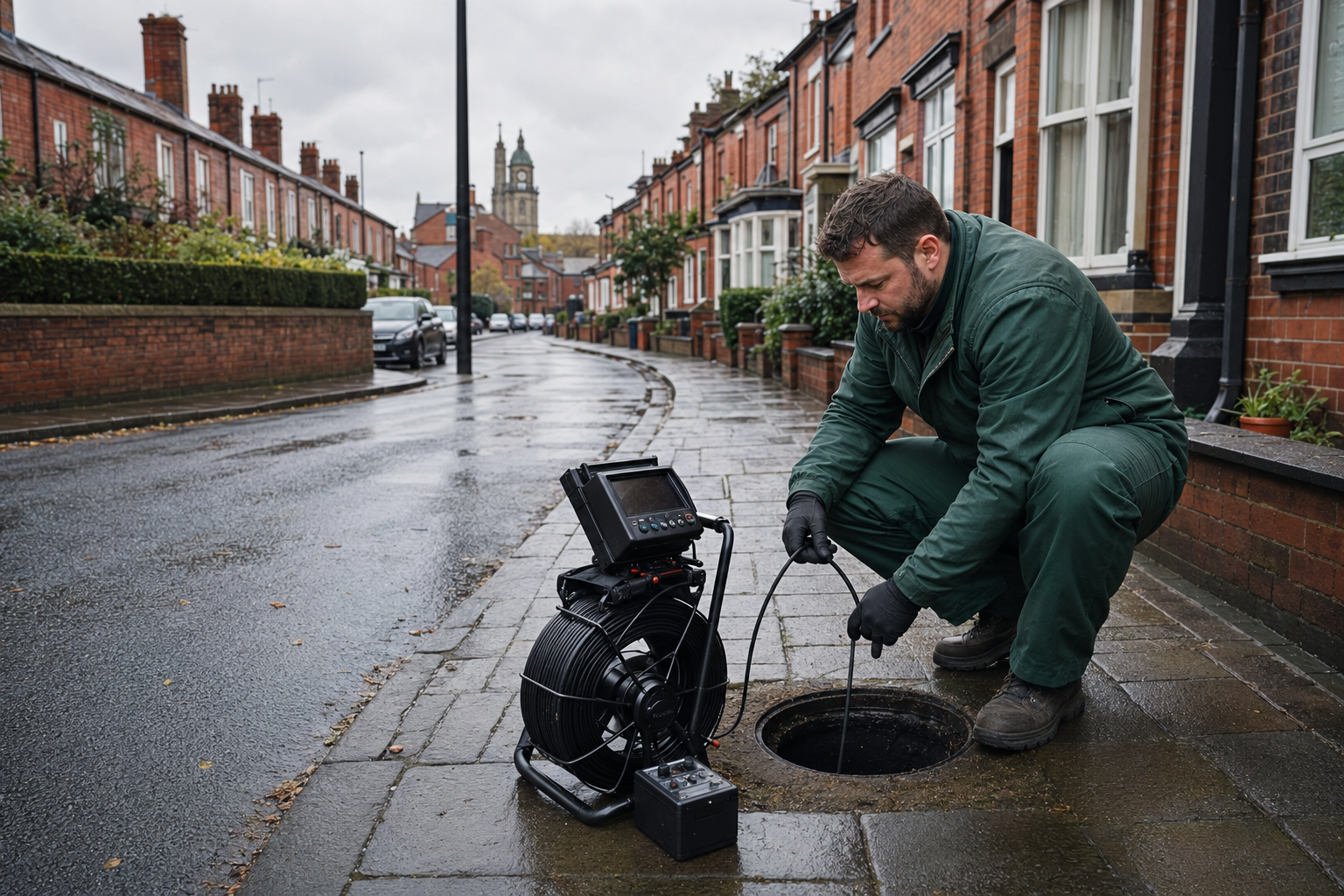
1. Water drains more slowly
A sink or shower that takes longer to empty is often the first sign. Hair, soap, food or grease may be reducing the space inside the pipe.
One slow fitting usually points to a nearby trap or waste pipe. Several slow fixtures can point to a blockage in the main private drain.
2. Toilets rise before they fall
The water level may rise high after flushing and then drop slowly. Stop repeated flushing if it comes close to the rim.
A weak flush can also come from the toilet itself, so check whether other drains are slow before assuming the underground pipe is blocked.
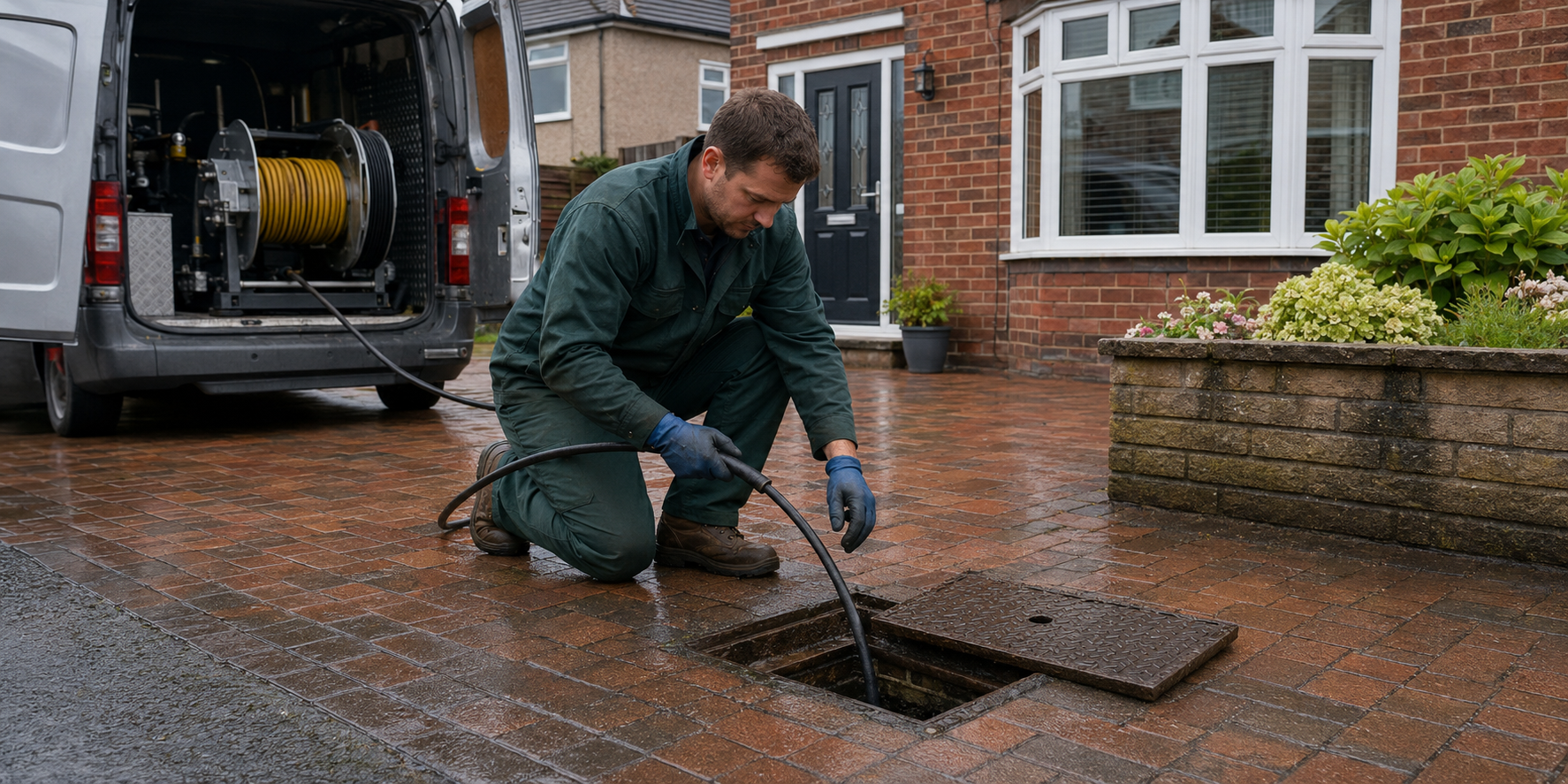
3. Drains gurgle
Gurgling happens when trapped air moves through restricted pipework. You may hear it from a sink when a toilet flushes or from a shower when a washing machine empties.
One occasional sound is not proof of a fault. Regular noise with slow flow deserves attention.
4. Smells appear and disappear
Waste trapped in a drain can create a sour or sewage-like smell. A dry trap can also let sewer gas enter, especially in a rarely used room.
Run water into little-used traps first. If the smell remains or comes from an outside drain, the system may need cleaning or inspection.
5. An outside gully holds water
A gully may contain some water by design, but wastewater should not sit near the top or overflow when a sink empties. Leaves, grease and silt are common causes.
Stop using the connected appliances if the level keeps rising.
6. Toilet paper appears in a manhole
Waste sitting in an inspection chamber shows that flow is restricted farther along the run. Do not lean into a chamber or enter any confined space.
A professional can clear the run from a safe access point and test the downstream flow.
7. The same problem returns
A blockage that comes back after clearing may have a structural cause. Roots, displaced joints and low sections can catch waste again.
A CCTV survey is the useful next step when repeat clearing does not solve the problem.