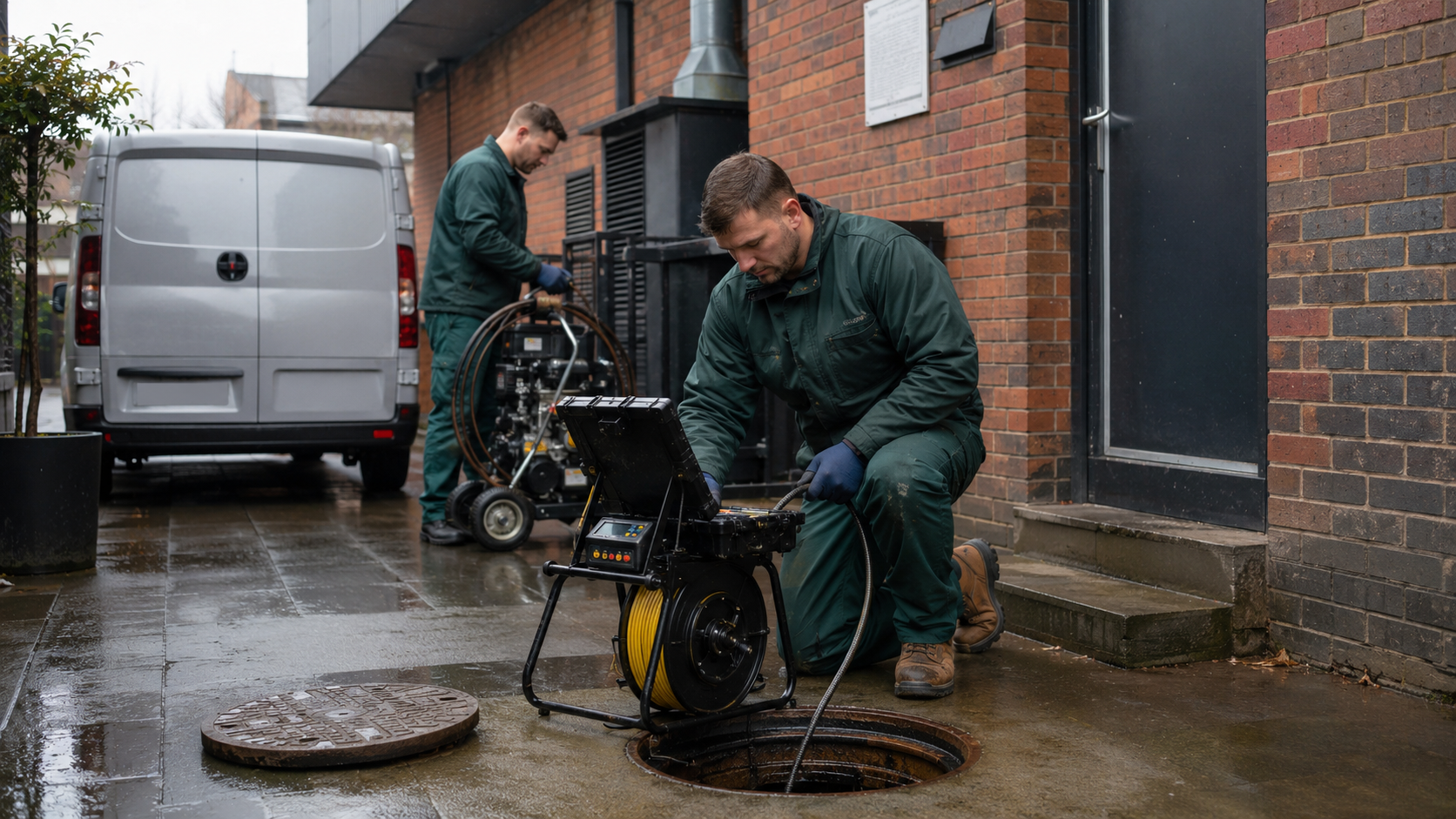
Map critical drains and access points
Know which manholes, gullies and internal drains serve kitchens, toilets, yards and plant. Keep covers accessible and include drain routes in site plans where possible.
A CCTV survey and tracing work can fill gaps in older records. Mark shared or public connections separately.
Record slow flow and repeat faults
A short log shows patterns before they become emergencies. Note the date, location, symptoms, weather and action taken.
Repeated clearing in one place suggests the cause needs investigation rather than another routine visit.
- Gurgling or slow fixtures
- Odours and standing water
- The same area blocking again
- Heavy rain linked to flooding
- Grease or silt found during cleaning
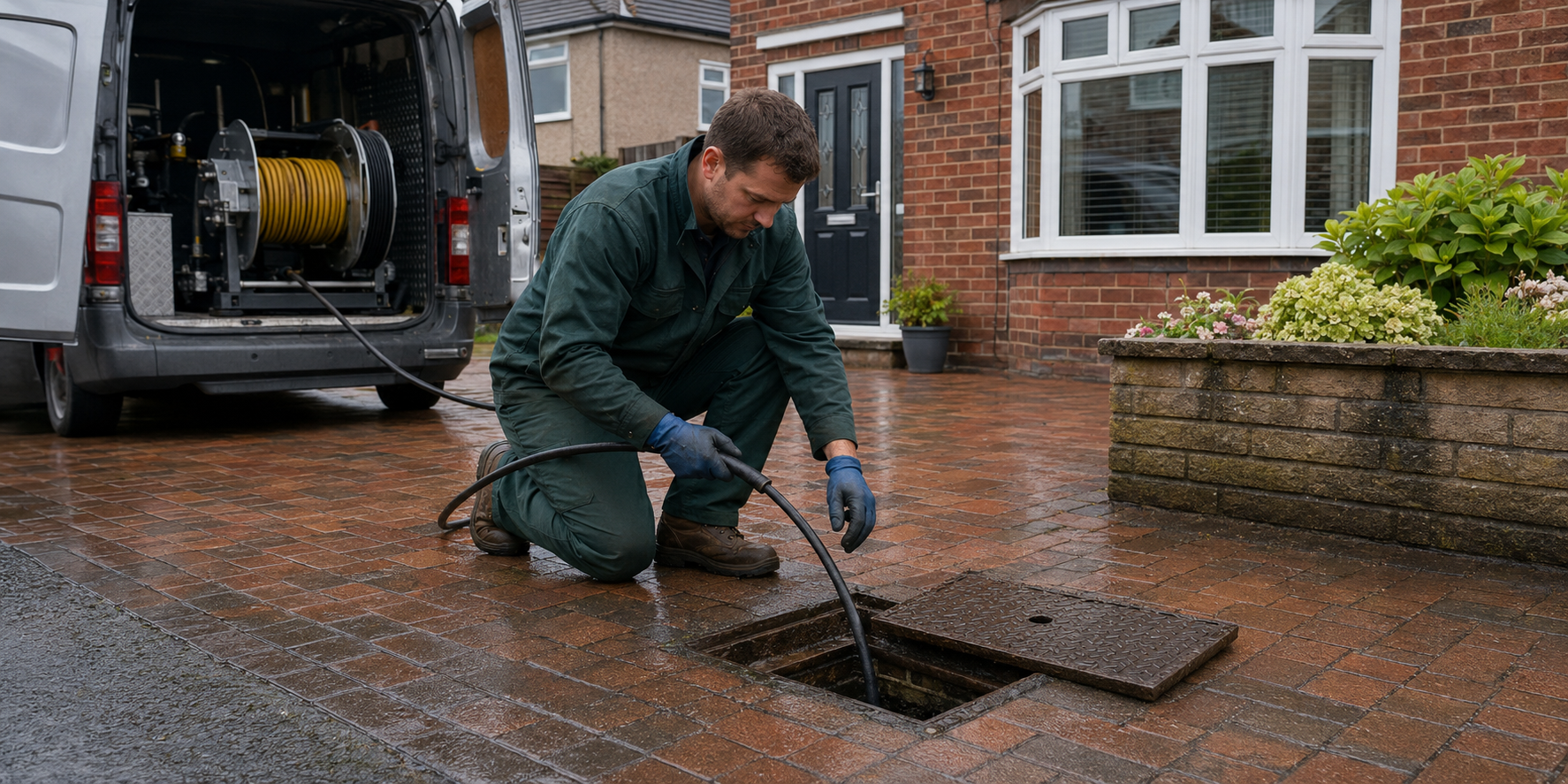
Control what enters the system
Train staff to keep wipes, food, fat and cleaning cloths out of drains. Fit and clean strainers where suitable.
Commercial kitchens should manage fats, oils and grease from preparation through disposal. A grease trap only works when it is sized, used and maintained correctly.
Set a risk-based cleaning schedule
Not every drain needs the same frequency. Busy kitchen lines, yard gullies and known low points need more attention than clean, lightly used runs.
Base the schedule on evidence from previous blockages, waste type and survey condition. Review it when the site use changes.
Plan safe access and quieter work times
Agree access, permits, deliveries, customer routes and hygiene controls before the visit. Planned jetting may be easier before opening or after the busiest period.
Keep staff away from open chambers and hoses. Never allow entry into a drain or chamber without proper confined-space controls.
Keep useful records
Store survey footage, cleaning dates, repair scopes and defect locations. Records help new facilities staff understand the system and support maintenance budgets.
After a structural repair, keep the final camera check with the invoice and warranty information.